 English
 中文简体
中文简体 Français
 Español
 عربى
عربى
How China Entrance Door Manufacturing Supports Security and Style Balance
Jul 10, 2026
Entrance doors are often the first physical point of contact between a building and the outside world. They set the tone for both safety and appearance. In modern construction, this balance between protection and visual design has become more noticeable.
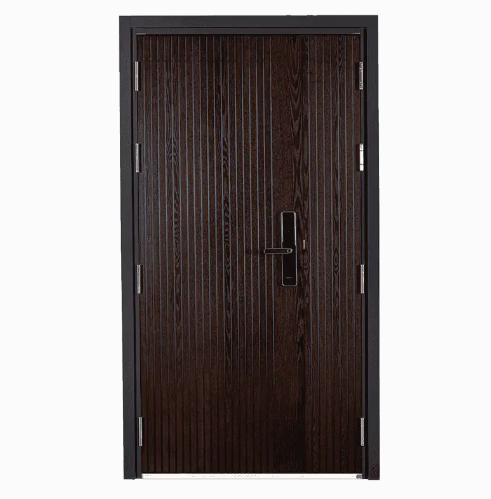
China entrance door manufacturing has developed around this dual expectation. Instead of focusing only on structure or decoration, production now reflects a combined approach. Security needs and design preferences are considered together during development.
This shift is closely linked to how residential and commercial spaces are changing. Buildings are no longer designed for function alone. They are expected to feel comfortable, look refined, and still maintain reliable protection.
Why Has Entrance Door Design Become a Balance Between Security and Style?
In earlier building practices, entrance doors were mainly judged by durability. A strong structure was often enough. Appearance played a smaller role, especially in industrial or residential projects with limited design focus.
That situation has changed. Modern buildings are more visible. Public and private spaces often overlap in design expectations. A door is no longer just a barrier. It is part of the overall architectural expression.
At the same time, safety concerns remain important. Buildings still require reliable separation between indoor and outdoor environments. This includes control of access and protection of interior spaces.
These two expectations now exist together. A door must feel secure while also fitting into visual design concepts.
How Does Manufacturing Support Security in Entrance Doors?
A secure front door isn't protected by one single part alone. Its safety comes from solid frames, durable materials and careful building work all working together.
Factories build firm door frames and assemble every piece uniformly. Every part of the door set is made to hold up well with daily opening and closing.
The whole structure can withstand constant force. Hinges, lock positions and surrounding frames are fitted neatly to stay stable for years. Even if the inner structure looks plain, it adds a lot of strength.
Production steps also cut down fragile spots. When all components fit tightly against each other, the whole door becomes much tougher.
Door security isn't just about stopping forced entry. It also needs to stay reliable through long-term everyday use.
How Is Style Integrated into Entrance Door Production?
Style in entrance doors is not limited to surface decoration. It includes shape, proportion, and surface treatment.
Manufacturing processes allow different visual outcomes while maintaining structural balance. This includes variations in surface texture, color tone, and panel layout.
Design flexibility is important because building styles vary widely. Some projects prefer simple surfaces. Others use more detailed visual patterns.
Instead of treating design as an afterthought, modern production integrates it into early planning stages. This helps ensure that appearance and structure remain aligned.
The goal is not decoration alone. It is visual harmony with the surrounding architecture.
Why Is Material Selection Important for Both Security and Appearance?
Material choice affects both performance and visual outcome.
Strong structural materials support stability and long-term use. At the same time, surface compatibility influences how the door looks in different lighting and environments.
In manufacturing, materials are selected based on both durability and finish behavior. Some materials hold shape well under pressure. Others support smoother surface treatment.
This balance allows a single product to meet different expectations at once.
Material selection also affects how the door responds to environmental changes. Temperature shifts, moisture, and daily use patterns all play a role in long-term performance.
How Does Production Design Balance Function and Visual Detail?
Entrance Door Factory involves multiple stages where function and design meet.
Each stage influences the final result. Structural assembly ensures stability. Surface treatment shapes appearance. Final adjustments align both aspects into one product.
| Production Stage | Focus Area | Result in Final Door |
|---|---|---|
| Structural forming | Frame and core stability | Strong base structure |
| Surface preparation | External layer readiness | Smooth visual foundation |
| Design application | Style and appearance | Visual consistency |
| Assembly alignment | Component fitting | Balanced structure |
| Final adjustment | Detail refinement | Unified look and function |
These stages are not separate in purpose. They work together to support both strength and appearance.
What Challenges Exist When Balancing Security and Style?
Combining security and style is not always simple. Each requirement can influence the other.
A stronger structure may limit design flexibility. A more detailed visual surface may require careful integration to maintain stability.
Manufacturers often manage this balance through gradual adjustment rather than changes. Small design decisions can affect both appearance and performance.
Common challenges include:
- Maintaining structural strength while adjusting surface design
- Ensuring visual elements do not weaken frame stability
- Balancing production consistency with design variety
- Keeping assembly precise across different styles
- Managing material behavior under both functional and visual demands
These challenges are handled during planning and production rather than at the final stage alone.
How Are Modern Living Spaces Influencing Door Design?
Modern living spaces are more open and connected than before. Entrance areas often connect directly to interior design themes.
This creates a stronger link between exterior doors and interior atmosphere. A door is no longer isolated in function. It becomes part of the overall space experience.
As a result, design expectations have increased. Simplicity, visual balance, and material coordination are often considered together.
At the same time, security expectations remain unchanged. The door must still perform its protective role without interruption.
This dual expectation continues to shape manufacturing decisions.
How Does Manufacturing Support Customization Without Losing Stability?
Custom building products are more popular these days. Every job calls for unique looks and structural tweaks.
Front door factories handle this by letting customers pick different finishes inside a fixed reliable base. Designs can change freely, but the door's solid core stays unchanged.
They pull this off with modular construction. Key load-bearing parts stay uniform, while outer styling pieces get swapped to match customer requests.
This setup gives plenty of design room without messing with the door's vital supporting structure.
It also keeps production steady, even when putting together dozens of different door styles.
Why Is Entrance Door Manufacturing Connected to Long-Term Use Experience?
Entrance doors are used daily. They are not decorative objects placed occasionally. They experience repeated interaction over time.
Because of this, manufacturing must consider long-term behavior. Stability, alignment, and surface durability all influence user experience.
A well-balanced door maintains both its appearance and function after repeated use. It does not rely on short-term performance alone.
Long-term consistency becomes part of the design goal.
This includes how the door feels during opening and closing, how it fits within its frame, and how it maintains its visual condition over time.
How Is the Industry Evolving Toward Integrated Design Thinking?
Front door production now leans more into all-in-one design logic. Builders no longer split structural strength and exterior looks into two separate jobs.
Both function and style get planned side by side right at the very start of production.
This way avoids mismatches between safety performance and appearance, and makes manufacturing run more smoothly as well.
Makers weigh every design choice to make sure it works well for both security and visual appeal.
This shift follows wider trends in construction design. Today's building materials need to fill several purposes in one single product.
A front door is no longer just something to block entry; it also shapes how a building presents itself visually.
Share:
Related Products

 No. 1266, Huajie West Avenue, Yongkang City, Zhejiang Province, China
 [email protected]
 +86-13626793298
 [email protected]
Copyright © Yongkang Chenma Industry and Trade Co., Ltd. All rights reserved.

Sale Entrance Solid Wood Front Doors Manufacturer