 English
 中文简体
中文简体 Français
 Español
 عربى
عربى
Sound Insulation Solutions in Entrance Door Factory Products
Jul 17, 2026
Entrance doors are often judged by appearance at first, but their real function shows up in daily use. One of the noticeable comfort factors is how much outside noise gets through. In many buildings, sound does not enter in a direct way. It passes through small gaps, weak points, or parts of the structure that are not fully balanced.
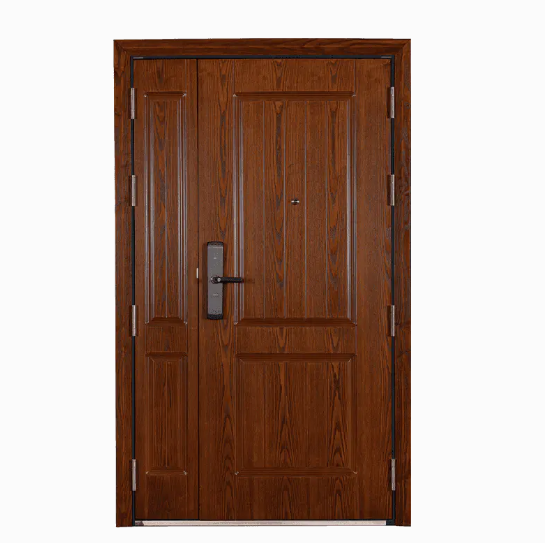
Entrance door factories treat sound insulation as a combination of different design choices rather than a single feature. It is shaped during production, adjusted in structure, and influenced by installation. When these parts work together, the door feels more stable in real environments.
Why sound control matters in entrance doors
Noise is part of almost every living or working space. It comes from streets, corridors, equipment, or even nearby movement inside the building. When it passes through a door, the indoor environment becomes less comfortable.
Sound insulation is not about creating complete silence. That is not realistic in most cases. Instead, the goal is to reduce how strongly sound enters a space and to make the indoor environment feel more steady.
In entrance door production, this idea is usually considered from the early design stage rather than added later.
How factories approach sound insulation as a system
In factory production, sound insulation is rarely handled through a single component. It is more about how different parts work together.
Most entrance door designs focus on a few main areas:
- internal structure
- edge contact areas
- frame matching
- surface stability
Each part affects how sound moves through or around the door. When one part is weak, the overall performance can feel less balanced.
So instead of trying to block sound from one direction, factories aim to reduce its movement across the whole structure.
Internal structure and how it affects sound movement
Inside the door, the structure plays a quiet but important role. Sound travels through vibration, and internal layers can slow down or reduce that movement.
Some designs use denser internal arrangements. Others rely on layered space to interrupt vibration paths. Both approaches aim to make sound travel less directly through the door body.
The effect is not always visible, but it becomes clear in use. A more stable internal structure often feels less ‘hollow“ when the door is closed, which usually means better sound control.
Factories adjust this part based on the expected environment, since not all doors are used in the same conditions.
Why edge sealing is often the sensitive area
Even with a solid structure, sound can still pass through small gaps around the edges. These gaps are usually the weakest point in the system.
Edge sealing is designed to reduce these openings. When the door closes, the contact between frame and panel needs to be consistent. If the pressure is uneven, small spaces may remain.
Over time, repeated use can also affect how tightly these areas stay aligned. That is why sealing design is not only about the initial fit, but also about maintaining contact after long-term movement.
A stable edge system often makes a noticeable difference in everyday noise reduction.
The role of frame alignment in real performance
The frame is the base that holds everything in position. If it is not stable, even a well-made door panel may not perform well.
In many cases, small installation differences can lead to uneven contact between door and frame. These small differences are enough to allow sound to pass through more easily.
Factories often design frames to support stable positioning during installation, but real performance still depends on how accurately everything is fitted on site.
A balanced frame system helps the door stay consistent during repeated opening and closing.
Surface layers and their indirect influence
The surface of the door is not just about appearance. It also plays a supporting role in how the structure behaves over time.
When the surface layer remains stable, it helps maintain overall rigidity. This indirectly supports sound control by reducing small vibrations across the panel.
If the surface changes unevenly over time, the structure may respond differently to impact or pressure, which can slightly affect how sound travels.
So while the surface is not the main sound barrier, it still contributes to long-term stability.
Combined design elements for sound insulation
Sound insulation in entrance doors comes from several parts working together rather than one strong feature.
| Design Element | Function in Use | Practical Effect |
|---|---|---|
| Internal structure | Controls vibration inside the door | Reduces direct sound movement |
| Edge sealing | Covers small gaps around the frame | Limits sound leakage |
| Frame alignment | Keeps door position stable | Maintains consistent contact |
| Surface stability | Supports overall rigidity | Reduces vibration spread |
| Material selection | Influences structural response | Helps control sound transmission behavior |
Each part may seem simple on its own, but together they create a more balanced system.
How material choices affect sound behavior
Different materials respond to vibration in different ways. Some reduce movement more effectively, while others focus on structural strength or durability.
Entrance door factories often combine materials rather than relying on a single type. This allows different layers of the door to handle different parts of sound movement.
The goal is not only to reduce noise, but also to keep performance stable over time. Materials that remain consistent under long use help maintain predictable sound insulation results.
Installation and its impact on final performance
Even a well-designed door can lose part of its performance if installation is not accurate. Small gaps, uneven pressure, or misalignment can all affect sound behavior.
In real environments, installation conditions vary. Walls are not always perfectly straight, and adjustments are often needed on site.
This is why final performance depends not only on factory design but also on how the door is fitted into the building structure.
A good installation helps the design work as intended.
Daily use and gradual changes over time
Doors are used many times every day. Opening, closing, pressure changes, and environmental shifts all affect how the structure behaves over time.
These small movements do not cause immediate failure, but they can slowly influence sealing and alignment.
That is why long-term sound insulation is not only about initial design. It is also about how the door adapts to repeated use.
Simple checks during use, such as noticing changes in closing feel or alignment, can help maintain stable performance.
Sound insulation as a full system outcome
In entrance door factory products, sound insulation is not controlled by one part alone. It is the result of structure, sealing, frame alignment, material choice, and installation working together.
When these elements stay balanced, sound reduction becomes more stable in real environments. When one part shifts, the overall effect can feel different.
This is why factories treat sound insulation as a system-level design rather than a single feature added at the end of production.
Share:
Related Products

 No. 1266, Huajie West Avenue, Yongkang City, Zhejiang Province, China
 [email protected]
 +86-13626793298
 [email protected]
Copyright © Yongkang Chenma Industry and Trade Co., Ltd. All rights reserved.

Sale Entrance Solid Wood Front Doors Manufacturer