 English
 中文简体
中文简体 Français
 Español
 عربى
عربى
What is a Spliced Door and How is it Made
May 08, 2026
In many interior and construction settings, the idea of a door has moved beyond a single solid piece. A spliced door reflects this shift. It is formed by joining multiple sections into one complete panel. At a glance, it may look similar to other doors, yet its structure tells a different story.
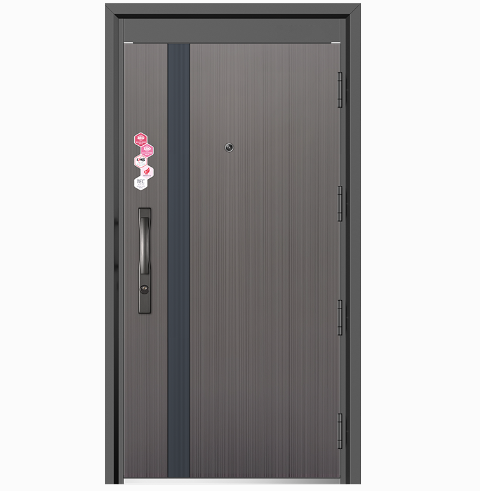
The concept is simple. Smaller pieces are combined to create a larger surface. This approach allows more flexibility in design and material use. It also changes how the door behaves over time. Instead of relying on one continuous piece, the structure spreads stress across several joined parts.The result is a door that carries both functional and visual variation. It is shaped through a sequence of steps rather than a single forming process.
How is a Spliced Door different from a single-piece door?
A single-piece door is made from one continuous panel. Its structure is straightforward. The material runs in one direction, and the surface reflects that continuity.A door is built from multiple segments. These segments are arranged and joined in a planned pattern. The final panel appears unified, but its internal structure is layered and combined.
This difference affects how each type responds to changes in the environment. A single-piece panel may react more noticeably to moisture or temperature shifts. A spliced structure distributes these effects across joints, which can help reduce visible movement.Design flexibility also changes. A door can combine different textures or patterns within one surface. This creates more visual variation without relying on a single large material piece.
The contrast can be summarized in a simple way:
| Feature | Single-piece door | Spliced door |
|---|---|---|
| Structure | One continuous panel | Multiple joined sections |
| Surface appearance | Uniform | Patterned or segmented |
| Response to change | Concentrated | Distributed across joints |
| Design flexibility | Limited variation | More adaptable |
This structural difference shapes how the door is made and how it performs in use.
What materials are commonly used in spliced doors?
The choice of material plays a central role in how a door is formed. Each piece must not only look consistent but also behave in a similar way when joined.Natural wood is often used because it offers a warm surface and can be shaped into smaller sections with relative ease. Each segment can be selected and arranged to create a balanced appearance.Engineered panels are also common. These materials are designed to provide a more uniform structure. When used in spliced construction, they help reduce variation between segments.Some designs combine different surface layers. The inner structure may focus on stability, while the outer layer provides the visible finish.The goal is not only to create a solid panel but to ensure that each piece works well with the others. When materials respond differently to changes, the joints may become more noticeable over time.Careful selection helps maintain a consistent look and feel across the entire surface.
How are the individual sections prepared?
Before assembly begins, each section must be prepared. This stage focuses on shaping, smoothing, and aligning the pieces so they can be joined accurately.The edges of each segment are refined to create clean contact surfaces. Even small irregularities can affect how the pieces fit together.
Surface preparation also matters. Each section is cleaned and adjusted to ensure that no unwanted particles remain. This helps improve the quality of the connection during assembly.Consistency between pieces is checked. Differences in thickness or shape are corrected at this stage rather than later.Preparation may seem simple, yet it sets the foundation for the entire structure. When sections are aligned well from the beginning, the final panel becomes more stable.
How are the sections joined together?
Joining is the stage where separate pieces become a single unit. This process is carried out with attention to alignment and pressure.The segments are arranged in a planned layout. This layout may follow a pattern or a directional flow, depending on the intended appearance.During joining, pressure is applied to hold the pieces together. This ensures that the contact surfaces remain close and stable.
The goal is to create a connection that feels continuous across the panel. Even though the door is made of multiple parts, the surface should appear unified.After joining, the panel is left to stabilize. This allows the structure to settle into its final form.Any slight misalignment at this stage can affect both appearance and function. That is why careful positioning is important throughout the process.
What happens after the panel is formed?
Once the main panel is created, it moves into a stage of refinement. The surface is adjusted to achieve a smooth and even finish.Edges are trimmed to create a clean outline. This helps the door fit properly within its frame.
The surface may be treated to enhance its appearance and protect it from daily use. This treatment is applied evenly to maintain consistency.At this stage, the door begins to take on its final look. The joined sections become less noticeable, and the panel appears more unified.Inspection also takes place here. The door is checked for alignment, surface condition, and overall balance.Any small adjustment is made before the door moves forward.
How does design influence the splicing process?
Design plays a strong role in how a door is arranged. The placement of each section is not random. It follows a visual plan.Some designs emphasize symmetry. Sections are arranged in a balanced pattern across the panel. This creates a sense of order.Other designs focus on variation. Different tones or textures are combined to create contrast. The joints become part of the visual effect.Direction also matters. The orientation of each segment can influence how light interacts with the surface.Design decisions are made early in the process. They guide how materials are selected and how sections are arranged.The splicing method allows for a wide range of visual outcomes while maintaining a consistent structure.
How is quality checked during production?
Quality checking is integrated throughout the process rather than placed at a single point. Each stage includes its own form of observation.During preparation, alignment and surface condition are reviewed. During joining, the focus shifts to connection stability.After forming, the entire panel is examined as a complete unit. The goal is to ensure that all sections work together smoothly.
The following table outlines common checkpoints:
| Stage | What is checked | Purpose |
|---|---|---|
| Section preparation | Shape and surface | Ensure proper fit |
| Joining | Alignment and contact | Maintain structural stability |
| Surface finishing | Smoothness and consistency | Improve appearance |
| Final inspection | Overall balance | Confirm usability |
These checks help maintain consistency across different units.
How does a spliced door perform in daily use?
In daily use, a door behaves as a unified structure. The joints are designed to remain stable under normal conditions.Because the structure is divided into smaller sections, changes in the environment are distributed across the panel. This can reduce the visibility of movement over time.
The surface remains consistent when properly maintained. Cleaning and regular care help preserve its appearance.The door also retains flexibility in design. Its segmented structure allows it to fit into different interior styles without relying on a single visual pattern.
The performance of a door is closely tied to how it was made. Careful preparation, accurate joining, and consistent finishing all contribute to how it behaves once installed.The process behind it is gradual and layered, much like the structure itself.
Share:
Related Products

 No. 1266, Huajie West Avenue, Yongkang City, Zhejiang Province, China
 [email protected]
 +86-13626793298
 [email protected]
Copyright © Yongkang Chenma Industry and Trade Co., Ltd. All rights reserved.

Sale Entrance Solid Wood Front Doors Manufacturer