 English
 中文简体
中文简体 Français
 Español
 عربى
عربى
What Should You Consider When Choosing Steel Windows and Doors Manufacturers
Jun 12, 2026
Steel Windows and Doors Manufacturers are often selected when a project requires durability, visual clarity, and a strong architectural presence. Behind every finished frame is a manufacturing process that shapes how the product performs over time. Choosing a manufacturer is not only about appearance. It also affects installation experience, maintenance needs, and long-term stability.
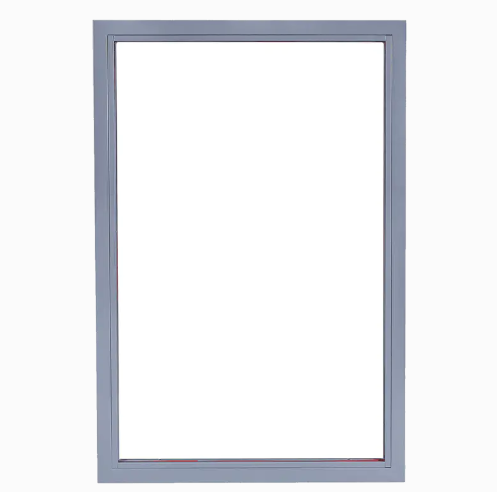
In practice, the selection process can feel broad. Many suppliers appear similar at glance. The differences usually show up later, during fabrication, delivery, or real-world use. A careful review of several aspects can help narrow the field in a more practical way.
What defines a reliable steel windows and doors manufacturer?
Reliability is not a single feature. It is a combination of consistency, process control, and communication clarity.
A manufacturer with stable output usually follows structured internal procedures. Materials are handled in a predictable way. Production steps are organized rather than improvised. This reduces variation between units in the same order.
Another point is documentation. Even without technical depth, a dependable manufacturer can explain how products are made, how inspections are carried out, and how issues are handled if something does not meet expectations.
There is also the matter of transparency. When questions are answered clearly and without delay, it often reflects internal organization. When answers are vague or inconsistent, uncertainty tends to appear later in the project cycle.
How does material sourcing influence final product quality?
Steel products begin with raw material decisions. The origin and handling of steel affect strength, surface stability, and response to environmental exposure.
Manufacturers that maintain close control over sourcing tend to produce more consistent results. This does not necessarily mean using or complex inputs. It often comes down to selection discipline and storage conditions.
Moisture exposure, contamination during storage, and improper handling can influence the final finish. Even if fabrication is done correctly, weak input control can create issues that only appear after installation.
A simplified overview of how material choices affect outcomes can be seen below:
| Material Aspect | Possible Influence on Finished Product |
|---|---|
| Surface condition before processing | Affects coating adhesion and visual smoothness |
| Storage environment | Impacts corrosion resistance over time |
| Uniformity of raw sections | Determines consistency in frame alignment |
| Handling before fabrication | Reduces or increases risk of surface defects |
These factors are not always visible during initial discussions. Asking about them can reveal how carefully a manufacturer manages early-stage quality control.
What role does fabrication consistency play in long-term performance?
Fabrication is where raw material becomes a functional product. At this stage, precision and repeatability matter more than complexity.
Even small differences in cutting, alignment, or joining can influence how a window or door behaves after installation. Misalignment may not be obvious immediately. Over time, it can affect movement, sealing, or structural balance.
Consistency across multiple units in one project is particularly important. When products are installed side by side, variation becomes more noticeable. Frames that differ slightly in dimension or finish can disrupt visual harmony.
Manufacturers that focus on stable processes often rely on repeatable workflows rather than changing methods between orders. This creates a predictable outcome, even when project sizes vary.
Another aspect is internal inspection. Some factories apply checks during production rather than only at the end. This approach helps identify deviations earlier, reducing the likelihood of rework.
Why does customization capability matter in modern building projects?
These days, architectural designs don't stick to standard shapes or typical sizes anymore. Classic Steel Door and Fire Resistant Window is expected to fit all kinds of different dimensions, styles, and specific functions the project calls for.
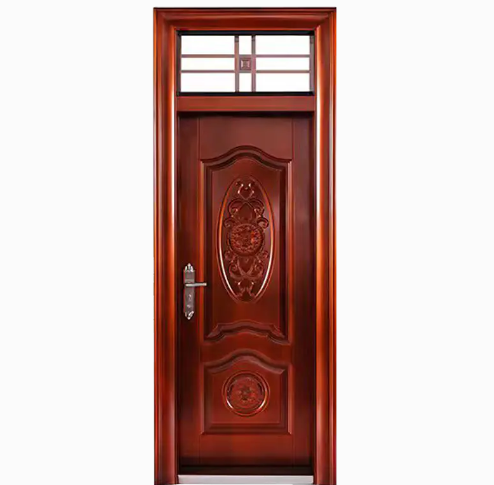
A manufacturer's customization ability basically shows how well they can handle requests that fall outside the usual specs. This covers changes in size, how the frames are put together, and even the final look of the surface.
A company with low flexibility might still make decent products, but only if everything stays within their comfort zone. As soon as the design changes even a little, you start seeing delays, extra costs, or forced compromises.
Customization isn't just about making it look nice. It also has a big impact on how smoothly things install on site. When the frames are properly adjusted back at the factory, there's less cutting or modifying needed during installation, which helps avoid sloppy fits and inconsistencies.
Another key part is how well the manufacturer can read drawings and turn them into actual production steps. If they get that part wrong, it often leads to back-and-forth fixes, which slows everything down and creates headaches between the design team and the installation crew.
How should communication and project handling be evaluated?
Communication often reflects the internal structure of a manufacturer. It is not only about response speed. It also includes clarity, consistency, and follow-through.
A well-managed project usually has defined points of contact. Information does not shift randomly between departments without explanation. When updates are provided, they are structured and easy to understand.
In contrast, unclear communication can find to repeated clarification requests. This may slow down decision-making and increase uncertainty during production stages.
Project handling also includes how changes are managed. In real projects, adjustments are sometimes necessary. A manufacturer's ability to incorporate changes without disrupting the entire process is a practical indicator of flexibility.
There is also the question of responsibility. When issues appear, the response approach matters. Some manufacturers focus on identifying causes and offering clear next steps. Others may shift explanations without resolution, which can complicate coordination.
What should be checked in production capacity and delivery stability?
Production capacity is not only about volume. It is also about how well a manufacturer manages workload under different conditions.
A facility may appear capable on paper, but actual performance depends on scheduling, resource allocation, and internal coordination. When multiple orders overlap, organization becomes more important than raw output.
Delivery stability is closely connected to this. Delays often arise not from single points of failure but from accumulation of small inefficiencies. These may include material waiting time, production bottlenecks, or packaging delays.
A practical way to view this aspect is to consider how predictable the timeline is, rather than how fast it is.
| Operational Area | What to Observe |
|---|---|
| Order scheduling | Whether timelines are clearly structured |
| Workflow balance | Whether production stages flow smoothly |
| Storage management | Whether finished items are handled efficiently |
| Shipment preparation | Whether packing and dispatch are coordinated |
Manufacturers with stable delivery patterns usually maintain internal buffers. This helps reduce disruption when unexpected changes occur.
How do finishing processes affect durability and appearance?
Finishing is the last step before the product goes out for installation. It plays a big role in both how the piece looks and how well it holds up against the elements.
A good, even finish creates a strong barrier on steel surfaces against moisture, temperature swings, and daily wear and tear. It also affects how nicely the product fits into the overall architectural look.
Uneven finishing isn't always obvious right away. But over time, small differences in coating thickness or how the surface was prepped can start to show up as spots, peeling, or fading.
Getting the surface ready before applying the finish is just as critical as the finishing itself. Thorough cleaning, smoothing, and proper prep work make sure the coating sticks well. If the preparation is skipped or done poorly, even a high-quality finish won't last as long as it should.
Color consistency matters too. On big projects, even tiny variations between units can stand out more than you'd think, especially when natural light hits them from different angles.
Finally, the quality of the finish influences how much maintenance the customer will need later. A solid finish usually stays good with minimal care, while a weak or rushed job often needs touch-ups much sooner.
What hidden factors are often overlooked during selection?
Some aspects are not immediately visible during initial discussions. These factors often influence satisfaction later in the project.
One of these is packaging and handling. Even well-made products can be affected during transport if protection is not carefully managed. Scratches or deformation can occur if units are not secured properly.
Another overlooked area is documentation clarity for installation. When instructions are unclear, installation teams may rely on interpretation, which can introduce variation in outcome.
After-sales response is also part of the picture. It is not only about fixing issues. It is about how quickly communication resumes when questions arise after delivery.
Storage before dispatch can also influence final condition. Products that remain in uncontrolled environments for extended periods may experience subtle changes that affect performance.
A practical checklist often includes points such as:
- Clarity of installation guidance
- Protection during transport
- Responsiveness after delivery
- Handling of adjustments or replacements
- Stability of stored finished goods
Each of these elements may seem secondary during selection. However, they often shape the real experience once the project is underway.
Steel windows and doors sit at the intersection of structure and design. The manufacturer behind them influences not only how they look, but how they behave over time in real environments.
Share:
Related Products

 No. 1266, Huajie West Avenue, Yongkang City, Zhejiang Province, China
 [email protected]
 +86-13626793298
 [email protected]
Copyright © Yongkang Chenma Industry and Trade Co., Ltd. All rights reserved.

Sale Entrance Solid Wood Front Doors Manufacturer