 English
 中文简体
中文简体 Français
 Español
 عربى
عربى
Why Is Security an Important Factor in Entrance Door Factory Production
Jun 05, 2026
An Entrance Door Factory is not just a product moving through a factory line. It is something people touch every day. It opens in the morning. It closes at night. It stands between a private space and the outside world. Because of this, the idea of security begins long before the door is installed. It starts inside the factory, in small decisions that shape how the door is made.
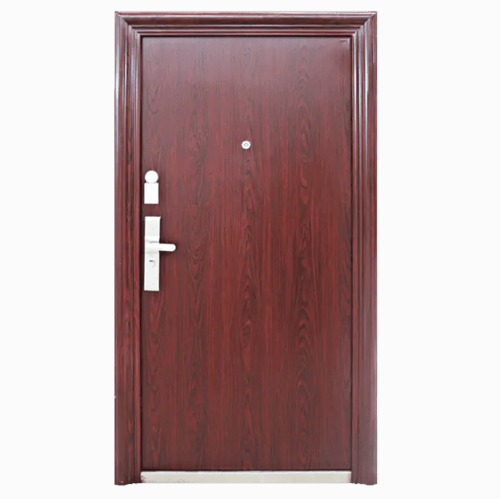
In many workshops, security is not discussed in abstract terms. It shows up in simple habits. A worker checking an edge by hand. A supervisor pausing a line because something feels slightly off. These moments are quiet, but they add up. Over time, they define whether a door feels solid or uncertain when someone uses it.
What Does Security Really Mean for an Entrance Door?
People often think of security as resistance. They imagine strength, weight, or thickness. In practice, it is more subtle. A secure door behaves in a steady way. It closes without effort. It stays aligned. It does not shift after repeated use.
Inside a factory, this idea is broken down into everyday checks:
- Does the door sit evenly in its frame?
- Does it return to the same position after opening?
- Are there any small gaps that appear over time?
- Do the moving parts feel stable or loose?
These questions are simple. They do not require complicated language. Yet they guide how production is carried out. Security becomes a matter of consistency rather than a single feature.
How Do Materials Affect the Sense of Security?
Before a door takes shape, there are raw materials waiting to be handled. Some arrive in large panels. Others come as smaller supporting parts. Each one carries its own behavior.
Workers often rely on experience when dealing with materials. They notice how a surface reacts when touched. They observe how a piece holds its form after being moved. Over time, patterns become clear.
A material that bends slightly when it should remain firm can affect the final structure. A surface that reacts unevenly to the environment may create changes later. These details are not always obvious at the start, but they matter in the long run.
Factories usually keep a simple routine for material checks:
| Observation Area | What Workers Look For |
|---|---|
| Shape | Whether it stays even and flat |
| Surface | Signs of marks or irregular feel |
| Handling response | Reaction when lifted or adjusted |
| Consistency | Similar behavior across pieces |
These checks rely more on attention than on tools. A trained eye often notices what machines might not highlight.
How Is Structure Built to Support Security?
Once materials move into production, the focus shifts to how everything comes together. A door is not a single piece. It is built layer by layer, with each part supporting the next.
Structure is where security begins to take form. If the inner frame is slightly off, the outer surface may still look fine, but the behavior of the door will change over time.
Factories often pay attention to a few key points during assembly:
- The internal frame must sit evenly
- Connections between parts should feel firm
- Pressure across the surface should be balanced
- Reinforced areas should match expected stress points
These are not complex ideas. They are repeated actions. Workers follow the same path each time, not because it is required on paper, but because it helps keep results stable.
A small shift in one layer can influence the whole structure. That is why assembly is rarely rushed. A steady pace makes it easier to notice when something does not feel right.
Why Is Alignment So Closely Watched?
A door may look strong, but if it does not align properly, its function changes. Alignment affects how the door meets its frame. It influences how pressure is distributed when the door is closed.
Inside a factory, alignment checks happen often. They are not saved for the end.
Workers might:
- Run a hand along the edge to feel for unevenness
- Look at how corners meet
- Gently move the door to observe its balance
- Compare it with another unit nearby
These actions take only a few seconds. Still, they reveal a lot. A slight difference in alignment can grow into a larger issue after installation.
Because of this, alignment is treated as an ongoing concern rather than a final adjustment.
Does Surface Treatment Affect Security?
At a glance, surface treatment seems unrelated to safety. It changes how a door looks. It gives color or texture. Yet it also protects what lies underneath.
A surface that is applied unevenly can wear out faster in certain areas. Over time, this may expose the inner structure. Small changes on the surface can find to deeper changes below.
Factories approach this step with care:
- Surfaces are cleaned before any treatment
- Application is kept even across the entire area
- Drying conditions are kept stable
- Finished pieces are checked under normal light
There is no need for complex inspection. Workers often rely on sight and touch. If something looks slightly inconsistent, it is usually corrected before moving on.
Why Do Locking Areas Receive Extra Attention?
The section around the lock is used more than any other part of the door. It handles repeated movement. It also connects with external hardware.
Because of this, factories treat this area with added care. Not in a dramatic way, but through small adjustments during production.
Some of these include:
- Keeping the surrounding material stable during shaping
- Adding support where repeated stress is expected
- Checking edges to avoid roughness
- Ensuring the area stays aligned with the rest of the structure
A door may appear solid overall, but if this section weakens, the sense of security changes. That is why attention here is steady and consistent.
How Do Factories Check Performance Before Completion?
Testing inside a factory often feels simple. There are no elaborate setups. The goal is to see how the door behaves in conditions that resemble daily use.
Workers may open and close the door several times. They may listen for irregular sounds. They may apply gentle pressure to see how the structure responds.
These checks are repeated, not because they are required, but because repetition reveals patterns. A door that behaves the same way each time is easier to trust.
If something changes during testing, the cause is usually traced back to an earlier step. This connection helps improve future production as well.
What Role Do Workers Play in Maintaining Security?
Machines and tools are part of the process, but people shape the outcome. Workers develop a sense of familiarity with the products they build.
Over time, they notice details that are hard to describe:
- A slight difference in weight
- A change in how a part fits into place
- A subtle sound during movement
- A feeling that something is not as stable as usual
These observations are often shared casually. A quick comment to a colleague. A brief pause to adjust a part. These moments are not recorded, yet they are part of quality control.
Factories that keep teams stable often see more consistent results. Familiarity reduces variation. It allows small issues to be caught early.
How Are Small Problems Handled on the Production Floor?
Not every issue requires a large response. In many cases, the solution is simple, but it depends on quick recognition.
A typical situation may unfold like this:
- A worker notices something slightly unusual
- Work pauses for a closer look
- The recent steps are reviewed
- A small adjustment is made
- Production continues with added awareness
There is no need for complicated systems. What matters is the willingness to stop and look carefully. This habit prevents small problems from becoming larger ones.
How Do Working Conditions Influence Security?
The environment inside a factory can affect how materials and products behave. Changes in temperature or humidity may not seem important at first, but they can influence how parts settle.
Factories often try to keep conditions steady:
- Materials are stored in controlled spaces
- Work areas are kept clean
- Sudden environmental changes are avoided
- Movement between different areas is managed carefully
These efforts reduce variation. When the environment remains stable, the behavior of materials becomes more predictable.
Why Does Consistency Matter More Than Complexity?
It is easy to assume that security comes from adding more features or making things more complicated. In practice, consistency plays a larger role.
A door that behaves the same way every day feels more reliable than one with complex elements that act unpredictably. Factories understand this through experience.
They focus on:
- Keeping processes simple and repeatable
- Reducing unnecessary changes
- Maintaining steady workflows
- Encouraging careful observation
This approach may not look impressive from the outside, but it creates stable results.
How Does Security Influence Everyday Experience?
When someone uses an entrance door, they rarely think about how it was made. They notice how it feels. A smooth closing motion. A firm contact with the frame. A quiet, steady response.
These details shape perception. A door that behaves consistently gives a sense of control. A door that shifts or feels uneven can create doubt.
Factories are aware of this connection. Security is not only about preventing force. It is about creating a steady experience that people can rely on without thinking about it.
That experience begins in the factory, long before the door reaches its final place.
Share:
Related Products

 No. 1266, Huajie West Avenue, Yongkang City, Zhejiang Province, China
 [email protected]
 +86-13626793298
 [email protected]
Copyright © Yongkang Chenma Industry and Trade Co., Ltd. All rights reserved.

Sale Entrance Solid Wood Front Doors Manufacturer