 English
 中文简体
中文简体 Français
 Español
 عربى
عربى
Balance and Smooth Operation in Custom Door Systems
Jan 09, 2026
Unique Challenges of Irregular Door Sizes
Designing and installing Non-Standard Doors presents a set of challenges that differ significantly from those associated with mass-produced, standard-sized doors. Because these doors are tailored to unusual openings, architectural renovations, or special aesthetic requirements, their dimensions often exceed or deviate from typical height-to-width ratios. This irregularity directly affects balance and opening performance. When weight distribution is uneven or structural tolerances are misjudged, problems such as sagging, friction, or uneven gaps can occur. Therefore, understanding how size, proportion, and weight interact is the foundation for achieving stable and smooth door operation.
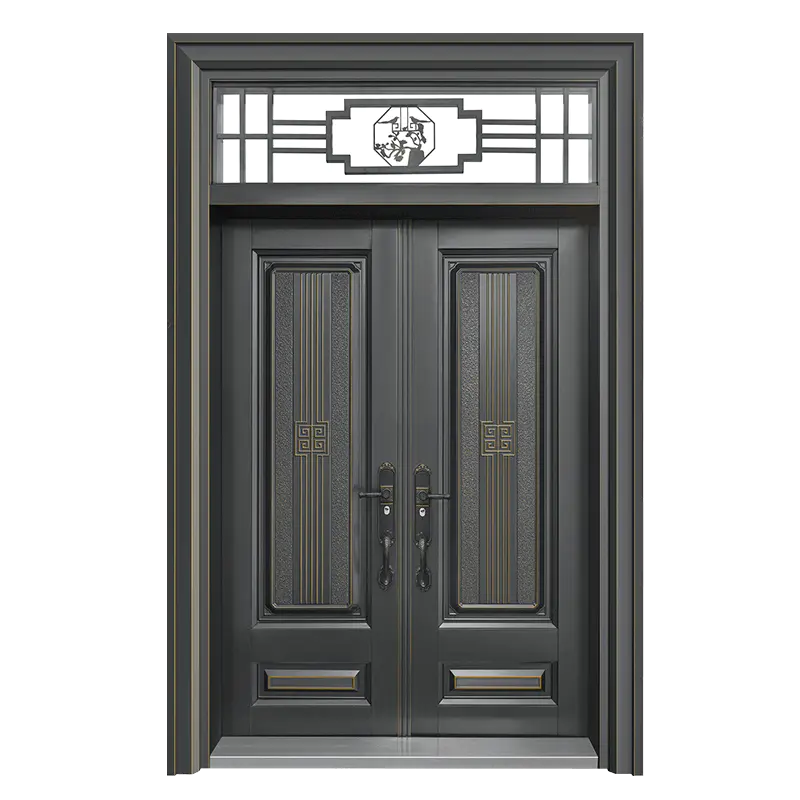
Accurate Measurement and Structural Assessment Before Fabrication
One of the critical steps in ensuring balance and smooth opening lies in precise measurement and a thorough assessment of the surrounding structure. Door openings in older buildings or customized spaces are rarely square or plumb. If these inconsistencies are not identified early, the finished door may fit poorly, causing binding or misalignment. Professional measurement considers not only width and height but also wall thickness, floor level variations, and frame integrity. By aligning door design with real structural conditions rather than assumed dimensions, manufacturers and installers can significantly reduce operational resistance.
Material Selection and Its Impact on Door Balance
The choice of material plays a decisive role in how a door behaves over time. Solid wood, metal, composite panels, and glass each have distinct density and expansion characteristics. For large or unusually shaped doors, heavier materials may require reinforcement or specialized hardware to prevent imbalance. Conversely, lightweight materials may flex if not properly supported, causing instability during opening and closing. Selecting materials with predictable behavior under temperature and humidity changes helps maintain consistent performance. When material properties are matched to door size and usage frequency, long-term balance becomes easier to achieve.
Internal Reinforcement and Core Design Considerations
Beyond surface materials, the internal structure of a door is essential to maintaining equilibrium. Reinforced cores, internal frames, or strategically placed stiffeners help distribute weight evenly across the door leaf. This is particularly important for tall or wide doors, where gravity can gradually pull the structure out of alignment. A well-engineered core reduces warping and twisting, ensuring that the door remains straight and responsive throughout its service life. Thoughtful internal design is often invisible to the user but is central to smooth operation.
Precision Hardware Selection and Load Distribution
Hinges, pivots, and support mechanisms are not merely accessories but structural components that directly influence balance. For custom door sizes, standard hardware may be insufficient to handle the load. Selecting hinges with appropriate load ratings and positioning them correctly along the door edge allows weight to be distributed evenly. In some cases, concealed hinges or pivot systems provide good balance by transferring load more efficiently to the frame and floor. Proper hardware alignment reduces friction and prevents uneven wear, which in turn preserves smooth movement.
Frame Alignment and Installation Accuracy
Even the designed door can fail to operate smoothly if the frame is improperly installed. Frame alignment must be exact, with consistent clearances on all sides to avoid contact points that cause resistance. Installers should pay close attention to plumb, level, and square during installation, adjusting shims and anchors as needed. A stable, well-anchored frame provides the reference point that allows the door to move freely. Installation accuracy is often the deciding factor between a door that feels effortless and one that requires constant adjustment.
Share:
Related Products

 No. 1266, Huajie West Avenue, Yongkang City, Zhejiang Province, China
 [email protected]
 +86-13626793298
 [email protected]
Copyright © Yongkang Chenma Industry and Trade Co., Ltd. All rights reserved.

Sale Entrance Solid Wood Front Doors Manufacturer